

Producer: Domaines Ott
Producer: Domaines Ott
Domaines Ott was founded in 1912 by Marcel Ott and is now regarded as one of the best rosé producers in the world. There are in fact three separate wineries: Clos Mireille in Cotes de Provence which is close to the Mediterranean and is influenced by its coastal position, Chateau Romassan in Bandol and the original estate at Chateau de Selle in Taradeau which has a warmer but sheltered position.
All three estates produce distinct styles of wine that have always been focused on quality and showing the world the potential of rosé wine.
Region: Provence
Region: Provence
Provence, located in southeastern France along the Mediterranean coast, is the country’s oldest wine-producing region, celebrated primarily for its iconic rosé wines. The region enjoys a warm Mediterranean climate, with abundant sunshine, mild winters, and the cooling influence of the mistral wind, which helps prevent vine diseases and promotes healthy ripening.
Soils in Provence vary widely, ranging from limestone and clay to schist and sandstone, providing ideal conditions for a diverse range of grape varieties. Key grapes include Grenache, Cinsault, Syrah, Mourvèdre, Carignan, and Tibouren for reds and rosés, while Rolle (Vermentino), Ugni Blanc, and Clairette are prominent for whites.
Provence rosés, which make up over 85% of the region's production, are typically pale in color, dry, and refreshing, offering delicate aromas of strawberry, citrus, melon, and herbs like thyme and rosemary. These wines often have a subtle minerality and crisp acidity, reflecting the terroir.
The region also produces elegant reds and increasingly high-quality whites. Sub-appellations like Côtes de Provence, Bandol, and Cassis offer distinct styles—Bandol, in particular, is renowned for structured, age-worthy reds made primarily from Mourvèdre. Overall, Provence delivers wines of finesse, freshness, and unmistakable Mediterranean charm.
Grape: Grenache/Garnacha
Grape: Grenache/Garnacha
Grenache/Garnacha
Grenache, known as Garnacha in Spain, is one of the world’s most widely planted and versatile red grape varieties. Believed to have originated in Aragon, northeastern Spain, it spread across the Mediterranean and is now integral to many of the world’s great wine regions. It thrives in hot, dry climates and is particularly drought-resistant, with late-ripening characteristics that require long growing seasons.
Viticulturally, Grenache is vigorous and productive, often grown as bush vines to control yield and improve concentration. It prefers well-drained soils like schist, gravel, and sand, contributing to its rich texture and ripeness.
In Spain, Garnacha is prominent in regions such as Priorat, Rioja (often blended), and Aragón, producing wines with ripe red fruit, spice, and earthy notes. In France, Grenache is the backbone of Southern Rhône blends (e.g. Châteauneuf-du-Pape), offering warmth, red berry fruit, and herbal nuances. It is also widely planted in Australia (notably in McLaren Vale), the U.S. (especially California), and South Africa.
Grenache produces a range of styles—from fresh, fruity rosés to powerful reds and fortified wines. Typical flavours include strawberry, raspberry, white pepper, dried herbs, and sometimes leather and liquorice with age. Its soft tannins and plush texture make it both approachable and age-worthy.
Cinsault
Cinsault (also spelled Cinsaut) is a versatile red grape variety traditionally associated with the south of France, particularly the Languedoc and Provence regions. It thrives in hot, dry climates and is valued both as a blending grape and, increasingly, for varietal wines. Cinsault is also a key component in many rosés, including those from Provence, and has played a historical role in the wines of North Africa and Lebanon. It is one of the parent grapes of South Africa’s Pinotage, having been crossed with Pinot Noir.
The grape produces light- to medium-bodied wines with soft tannins and moderate acidity. Its aromatic profile is typically fresh and fruit-driven, offering notes of red berries such as strawberry and raspberry, alongside floral hints, spice, and occasionally a touch of earth or garrigue. When yields are controlled and vines are well-managed, Cinsault can produce elegant, perfumed wines with notable finesse.
Viticulturally, Cinsault is prized for its drought resistance and productivity, though it can suffer from poor fruit concentration if overcropped. Its large berries and thin skins make it susceptible to rot in humid conditions, so it is best suited to warm, dry climates. Today, it is seeing renewed interest in regions like South Africa, California, and Australia for fresh, low-intervention winemaking.
Syrah/Shiraz
Syrah, also known as Shiraz in Australia and parts of the New World, is one of the world’s most celebrated red grape varieties. Its origins trace back to the Rhône Valley in France, where it thrives in both the northern Rhône’s steep, granite slopes and the warmer southern regions. Syrah vines are hardy and adaptable, tolerating a range of soils, but they prefer well-drained sites with ample sunlight. The grape is naturally vigorous, with small, thick-skinned berries that produce deeply coloured wines rich in tannin and flavour.
Today, Syrah is planted widely across the globe. In France, it remains dominant in appellations such as Hermitage, Côte-Rôtie, and Crozes-Hermitage. In Australia, Shiraz is the country’s flagship variety, producing styles from bold, ripe Barossa bottlings to elegant, cool-climate Yarra Valley expressions. Significant plantings also exist in South Africa, the United States (notably California and Washington State), Chile, and Argentina.
The style of Syrah/Shiraz varies with climate and winemaking approach. Cool-climate examples offer notes of black pepper, violets, and fresh blackberry, with firm acidity and structure. Warmer regions produce richer, fuller wines with flavours of ripe plum, black cherry, chocolate, and spice. Across styles, Syrah is prized for its depth, versatility, and ability to age gracefully.
Mourvedre
Mourvèdre (Monastrell in Spain; Mataro in Australia and California) is widely thought to originate from eastern Spain, historically linked to Murviedro (Sagunto) and the Valencia/Jumilla heartlands. Heat-loving and late ripening, it thrives in warm, dry climates and on poor, calcareous, well-drained soils. The variety has small, thick-skinned berries and compact bunches, giving deep colour, firm tannins and notable structure.
Viticulturally, Mourvèdre demands a long growing season and sheltered sites; cool, windy flowering can cause coulure, and tight clusters are susceptible to mildew if humidity rises. Canopy management and yield control are essential to avoid rustic tannins, while careful oxygen management in the cellar helps prevent reductive aromas.
Beyond Spain (Jumilla, Yecla, Almansa), Mourvèdre is a Mediterranean stalwart in southern France—key in the southern Rhône (as part of GSM blends) and the Languedoc-Roussillon, and the signature grape of Bandol in Provence, where it makes some of France’s most ageworthy reds and structured rosés. It is also successful in California (Paso Robles, Contra Costa), Australia (McLaren Vale, Barossa), South Africa and Chile.
Stylistically, Mourvèdre ranges from robust varietal reds to blending components that lend colour, tannin and savoury depth. Typical flavours include blackberry, black plum and dark cherry, with notes of violet, black pepper, liquorice, cocoa, cured meat and wild Mediterranean herbs (garrigue). With bottle age it develops leathery, gamey and earthy complexity. Rosés featuring Mourvèdre—especially from Bandol—are dry, textural and gastronomic, offering red berry, orange peel and a subtly spicy, saline finish.
Grape: Cinsault
Grape: Cinsault
Grenache/Garnacha
Grenache, known as Garnacha in Spain, is one of the world’s most widely planted and versatile red grape varieties. Believed to have originated in Aragon, northeastern Spain, it spread across the Mediterranean and is now integral to many of the world’s great wine regions. It thrives in hot, dry climates and is particularly drought-resistant, with late-ripening characteristics that require long growing seasons.
Viticulturally, Grenache is vigorous and productive, often grown as bush vines to control yield and improve concentration. It prefers well-drained soils like schist, gravel, and sand, contributing to its rich texture and ripeness.
In Spain, Garnacha is prominent in regions such as Priorat, Rioja (often blended), and Aragón, producing wines with ripe red fruit, spice, and earthy notes. In France, Grenache is the backbone of Southern Rhône blends (e.g. Châteauneuf-du-Pape), offering warmth, red berry fruit, and herbal nuances. It is also widely planted in Australia (notably in McLaren Vale), the U.S. (especially California), and South Africa.
Grenache produces a range of styles—from fresh, fruity rosés to powerful reds and fortified wines. Typical flavours include strawberry, raspberry, white pepper, dried herbs, and sometimes leather and liquorice with age. Its soft tannins and plush texture make it both approachable and age-worthy.
Cinsault
Cinsault (also spelled Cinsaut) is a versatile red grape variety traditionally associated with the south of France, particularly the Languedoc and Provence regions. It thrives in hot, dry climates and is valued both as a blending grape and, increasingly, for varietal wines. Cinsault is also a key component in many rosés, including those from Provence, and has played a historical role in the wines of North Africa and Lebanon. It is one of the parent grapes of South Africa’s Pinotage, having been crossed with Pinot Noir.
The grape produces light- to medium-bodied wines with soft tannins and moderate acidity. Its aromatic profile is typically fresh and fruit-driven, offering notes of red berries such as strawberry and raspberry, alongside floral hints, spice, and occasionally a touch of earth or garrigue. When yields are controlled and vines are well-managed, Cinsault can produce elegant, perfumed wines with notable finesse.
Viticulturally, Cinsault is prized for its drought resistance and productivity, though it can suffer from poor fruit concentration if overcropped. Its large berries and thin skins make it susceptible to rot in humid conditions, so it is best suited to warm, dry climates. Today, it is seeing renewed interest in regions like South Africa, California, and Australia for fresh, low-intervention winemaking.
Syrah/Shiraz
Syrah, also known as Shiraz in Australia and parts of the New World, is one of the world’s most celebrated red grape varieties. Its origins trace back to the Rhône Valley in France, where it thrives in both the northern Rhône’s steep, granite slopes and the warmer southern regions. Syrah vines are hardy and adaptable, tolerating a range of soils, but they prefer well-drained sites with ample sunlight. The grape is naturally vigorous, with small, thick-skinned berries that produce deeply coloured wines rich in tannin and flavour.
Today, Syrah is planted widely across the globe. In France, it remains dominant in appellations such as Hermitage, Côte-Rôtie, and Crozes-Hermitage. In Australia, Shiraz is the country’s flagship variety, producing styles from bold, ripe Barossa bottlings to elegant, cool-climate Yarra Valley expressions. Significant plantings also exist in South Africa, the United States (notably California and Washington State), Chile, and Argentina.
The style of Syrah/Shiraz varies with climate and winemaking approach. Cool-climate examples offer notes of black pepper, violets, and fresh blackberry, with firm acidity and structure. Warmer regions produce richer, fuller wines with flavours of ripe plum, black cherry, chocolate, and spice. Across styles, Syrah is prized for its depth, versatility, and ability to age gracefully.
Mourvedre
Mourvèdre (Monastrell in Spain; Mataro in Australia and California) is widely thought to originate from eastern Spain, historically linked to Murviedro (Sagunto) and the Valencia/Jumilla heartlands. Heat-loving and late ripening, it thrives in warm, dry climates and on poor, calcareous, well-drained soils. The variety has small, thick-skinned berries and compact bunches, giving deep colour, firm tannins and notable structure.
Viticulturally, Mourvèdre demands a long growing season and sheltered sites; cool, windy flowering can cause coulure, and tight clusters are susceptible to mildew if humidity rises. Canopy management and yield control are essential to avoid rustic tannins, while careful oxygen management in the cellar helps prevent reductive aromas.
Beyond Spain (Jumilla, Yecla, Almansa), Mourvèdre is a Mediterranean stalwart in southern France—key in the southern Rhône (as part of GSM blends) and the Languedoc-Roussillon, and the signature grape of Bandol in Provence, where it makes some of France’s most ageworthy reds and structured rosés. It is also successful in California (Paso Robles, Contra Costa), Australia (McLaren Vale, Barossa), South Africa and Chile.
Stylistically, Mourvèdre ranges from robust varietal reds to blending components that lend colour, tannin and savoury depth. Typical flavours include blackberry, black plum and dark cherry, with notes of violet, black pepper, liquorice, cocoa, cured meat and wild Mediterranean herbs (garrigue). With bottle age it develops leathery, gamey and earthy complexity. Rosés featuring Mourvèdre—especially from Bandol—are dry, textural and gastronomic, offering red berry, orange peel and a subtly spicy, saline finish.
Grape: Syrah/Shiraz
Grape: Syrah/Shiraz
Grenache/Garnacha
Grenache, known as Garnacha in Spain, is one of the world’s most widely planted and versatile red grape varieties. Believed to have originated in Aragon, northeastern Spain, it spread across the Mediterranean and is now integral to many of the world’s great wine regions. It thrives in hot, dry climates and is particularly drought-resistant, with late-ripening characteristics that require long growing seasons.
Viticulturally, Grenache is vigorous and productive, often grown as bush vines to control yield and improve concentration. It prefers well-drained soils like schist, gravel, and sand, contributing to its rich texture and ripeness.
In Spain, Garnacha is prominent in regions such as Priorat, Rioja (often blended), and Aragón, producing wines with ripe red fruit, spice, and earthy notes. In France, Grenache is the backbone of Southern Rhône blends (e.g. Châteauneuf-du-Pape), offering warmth, red berry fruit, and herbal nuances. It is also widely planted in Australia (notably in McLaren Vale), the U.S. (especially California), and South Africa.
Grenache produces a range of styles—from fresh, fruity rosés to powerful reds and fortified wines. Typical flavours include strawberry, raspberry, white pepper, dried herbs, and sometimes leather and liquorice with age. Its soft tannins and plush texture make it both approachable and age-worthy.
Cinsault
Cinsault (also spelled Cinsaut) is a versatile red grape variety traditionally associated with the south of France, particularly the Languedoc and Provence regions. It thrives in hot, dry climates and is valued both as a blending grape and, increasingly, for varietal wines. Cinsault is also a key component in many rosés, including those from Provence, and has played a historical role in the wines of North Africa and Lebanon. It is one of the parent grapes of South Africa’s Pinotage, having been crossed with Pinot Noir.
The grape produces light- to medium-bodied wines with soft tannins and moderate acidity. Its aromatic profile is typically fresh and fruit-driven, offering notes of red berries such as strawberry and raspberry, alongside floral hints, spice, and occasionally a touch of earth or garrigue. When yields are controlled and vines are well-managed, Cinsault can produce elegant, perfumed wines with notable finesse.
Viticulturally, Cinsault is prized for its drought resistance and productivity, though it can suffer from poor fruit concentration if overcropped. Its large berries and thin skins make it susceptible to rot in humid conditions, so it is best suited to warm, dry climates. Today, it is seeing renewed interest in regions like South Africa, California, and Australia for fresh, low-intervention winemaking.
Syrah/Shiraz
Syrah, also known as Shiraz in Australia and parts of the New World, is one of the world’s most celebrated red grape varieties. Its origins trace back to the Rhône Valley in France, where it thrives in both the northern Rhône’s steep, granite slopes and the warmer southern regions. Syrah vines are hardy and adaptable, tolerating a range of soils, but they prefer well-drained sites with ample sunlight. The grape is naturally vigorous, with small, thick-skinned berries that produce deeply coloured wines rich in tannin and flavour.
Today, Syrah is planted widely across the globe. In France, it remains dominant in appellations such as Hermitage, Côte-Rôtie, and Crozes-Hermitage. In Australia, Shiraz is the country’s flagship variety, producing styles from bold, ripe Barossa bottlings to elegant, cool-climate Yarra Valley expressions. Significant plantings also exist in South Africa, the United States (notably California and Washington State), Chile, and Argentina.
The style of Syrah/Shiraz varies with climate and winemaking approach. Cool-climate examples offer notes of black pepper, violets, and fresh blackberry, with firm acidity and structure. Warmer regions produce richer, fuller wines with flavours of ripe plum, black cherry, chocolate, and spice. Across styles, Syrah is prized for its depth, versatility, and ability to age gracefully.
Mourvedre
Mourvèdre (Monastrell in Spain; Mataro in Australia and California) is widely thought to originate from eastern Spain, historically linked to Murviedro (Sagunto) and the Valencia/Jumilla heartlands. Heat-loving and late ripening, it thrives in warm, dry climates and on poor, calcareous, well-drained soils. The variety has small, thick-skinned berries and compact bunches, giving deep colour, firm tannins and notable structure.
Viticulturally, Mourvèdre demands a long growing season and sheltered sites; cool, windy flowering can cause coulure, and tight clusters are susceptible to mildew if humidity rises. Canopy management and yield control are essential to avoid rustic tannins, while careful oxygen management in the cellar helps prevent reductive aromas.
Beyond Spain (Jumilla, Yecla, Almansa), Mourvèdre is a Mediterranean stalwart in southern France—key in the southern Rhône (as part of GSM blends) and the Languedoc-Roussillon, and the signature grape of Bandol in Provence, where it makes some of France’s most ageworthy reds and structured rosés. It is also successful in California (Paso Robles, Contra Costa), Australia (McLaren Vale, Barossa), South Africa and Chile.
Stylistically, Mourvèdre ranges from robust varietal reds to blending components that lend colour, tannin and savoury depth. Typical flavours include blackberry, black plum and dark cherry, with notes of violet, black pepper, liquorice, cocoa, cured meat and wild Mediterranean herbs (garrigue). With bottle age it develops leathery, gamey and earthy complexity. Rosés featuring Mourvèdre—especially from Bandol—are dry, textural and gastronomic, offering red berry, orange peel and a subtly spicy, saline finish.
Grape: Mourvedre
Grape: Mourvedre
Grenache/Garnacha
Grenache, known as Garnacha in Spain, is one of the world’s most widely planted and versatile red grape varieties. Believed to have originated in Aragon, northeastern Spain, it spread across the Mediterranean and is now integral to many of the world’s great wine regions. It thrives in hot, dry climates and is particularly drought-resistant, with late-ripening characteristics that require long growing seasons.
Viticulturally, Grenache is vigorous and productive, often grown as bush vines to control yield and improve concentration. It prefers well-drained soils like schist, gravel, and sand, contributing to its rich texture and ripeness.
In Spain, Garnacha is prominent in regions such as Priorat, Rioja (often blended), and Aragón, producing wines with ripe red fruit, spice, and earthy notes. In France, Grenache is the backbone of Southern Rhône blends (e.g. Châteauneuf-du-Pape), offering warmth, red berry fruit, and herbal nuances. It is also widely planted in Australia (notably in McLaren Vale), the U.S. (especially California), and South Africa.
Grenache produces a range of styles—from fresh, fruity rosés to powerful reds and fortified wines. Typical flavours include strawberry, raspberry, white pepper, dried herbs, and sometimes leather and liquorice with age. Its soft tannins and plush texture make it both approachable and age-worthy.
Cinsault
Cinsault (also spelled Cinsaut) is a versatile red grape variety traditionally associated with the south of France, particularly the Languedoc and Provence regions. It thrives in hot, dry climates and is valued both as a blending grape and, increasingly, for varietal wines. Cinsault is also a key component in many rosés, including those from Provence, and has played a historical role in the wines of North Africa and Lebanon. It is one of the parent grapes of South Africa’s Pinotage, having been crossed with Pinot Noir.
The grape produces light- to medium-bodied wines with soft tannins and moderate acidity. Its aromatic profile is typically fresh and fruit-driven, offering notes of red berries such as strawberry and raspberry, alongside floral hints, spice, and occasionally a touch of earth or garrigue. When yields are controlled and vines are well-managed, Cinsault can produce elegant, perfumed wines with notable finesse.
Viticulturally, Cinsault is prized for its drought resistance and productivity, though it can suffer from poor fruit concentration if overcropped. Its large berries and thin skins make it susceptible to rot in humid conditions, so it is best suited to warm, dry climates. Today, it is seeing renewed interest in regions like South Africa, California, and Australia for fresh, low-intervention winemaking.
Syrah/Shiraz
Syrah, also known as Shiraz in Australia and parts of the New World, is one of the world’s most celebrated red grape varieties. Its origins trace back to the Rhône Valley in France, where it thrives in both the northern Rhône’s steep, granite slopes and the warmer southern regions. Syrah vines are hardy and adaptable, tolerating a range of soils, but they prefer well-drained sites with ample sunlight. The grape is naturally vigorous, with small, thick-skinned berries that produce deeply coloured wines rich in tannin and flavour.
Today, Syrah is planted widely across the globe. In France, it remains dominant in appellations such as Hermitage, Côte-Rôtie, and Crozes-Hermitage. In Australia, Shiraz is the country’s flagship variety, producing styles from bold, ripe Barossa bottlings to elegant, cool-climate Yarra Valley expressions. Significant plantings also exist in South Africa, the United States (notably California and Washington State), Chile, and Argentina.
The style of Syrah/Shiraz varies with climate and winemaking approach. Cool-climate examples offer notes of black pepper, violets, and fresh blackberry, with firm acidity and structure. Warmer regions produce richer, fuller wines with flavours of ripe plum, black cherry, chocolate, and spice. Across styles, Syrah is prized for its depth, versatility, and ability to age gracefully.
Mourvedre
Mourvèdre (Monastrell in Spain; Mataro in Australia and California) is widely thought to originate from eastern Spain, historically linked to Murviedro (Sagunto) and the Valencia/Jumilla heartlands. Heat-loving and late ripening, it thrives in warm, dry climates and on poor, calcareous, well-drained soils. The variety has small, thick-skinned berries and compact bunches, giving deep colour, firm tannins and notable structure.
Viticulturally, Mourvèdre demands a long growing season and sheltered sites; cool, windy flowering can cause coulure, and tight clusters are susceptible to mildew if humidity rises. Canopy management and yield control are essential to avoid rustic tannins, while careful oxygen management in the cellar helps prevent reductive aromas.
Beyond Spain (Jumilla, Yecla, Almansa), Mourvèdre is a Mediterranean stalwart in southern France—key in the southern Rhône (as part of GSM blends) and the Languedoc-Roussillon, and the signature grape of Bandol in Provence, where it makes some of France’s most ageworthy reds and structured rosés. It is also successful in California (Paso Robles, Contra Costa), Australia (McLaren Vale, Barossa), South Africa and Chile.
Stylistically, Mourvèdre ranges from robust varietal reds to blending components that lend colour, tannin and savoury depth. Typical flavours include blackberry, black plum and dark cherry, with notes of violet, black pepper, liquorice, cocoa, cured meat and wild Mediterranean herbs (garrigue). With bottle age it develops leathery, gamey and earthy complexity. Rosés featuring Mourvèdre—especially from Bandol—are dry, textural and gastronomic, offering red berry, orange peel and a subtly spicy, saline finish.
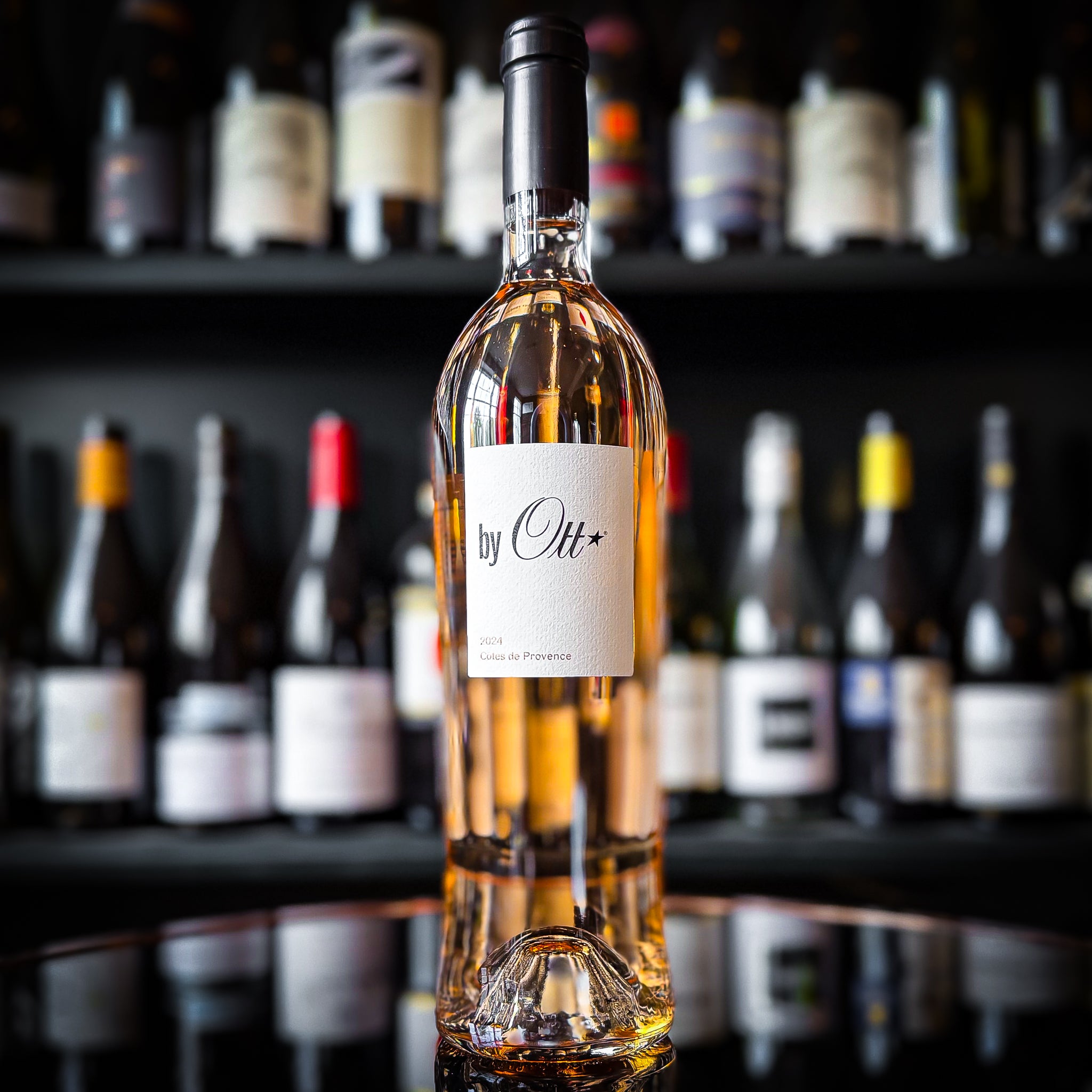
By.Ott Provence Rosé
By.Ott Provence Rosé
2025
From Domaines Ott, who are seen as the "gold standard" of all rosé.
 Apricot
 Cinnamon
 Lemon
Lemon


Hurry, only 6 items left in stock. Need more? Get in touch
- Free Delivery on orders over £150
Couldn't load pickup availability
Radiant peachy hue. The nose is delicate with a stone-fruit character that develops more tropical fruit aromas - think passion fruit and mango. It is full and intense on the palate but keeps a refreshing crispness due to the high acidity and redcurrant/citrus energy. Sweet spices such as cinnamon and cardamom give this rose a complexity that follows through onto the finish that is medium in length.
Made in Château de Selle’s new cellar, part of the winery is exclusively dedicated to making By.Ott. The grapes are handpicked followed by strict and selective sorting, making sure that only the best grapes go in. An extremely delicate pressing follows, using whole bunches with a super short maceration to produce the pale pink colour. A slow, cool fermentation takes place retain the bright aromatics and flavours.
Producer: Domaines Ott
Producer: Domaines Ott
Domaines Ott was founded in 1912 by Marcel Ott and is now regarded as one of the best rosé producers in the world. There are in fact three separate wineries: Clos Mireille in Cotes de Provence which is close to the Mediterranean and is influenced by its coastal position, Chateau Romassan in Bandol and the original estate at Chateau de Selle in Taradeau which has a warmer but sheltered position.
All three estates produce distinct styles of wine that have always been focused on quality and showing the world the potential of rosé wine.
Region: Provence
Region: Provence
Provence, located in southeastern France along the Mediterranean coast, is the country’s oldest wine-producing region, celebrated primarily for its iconic rosé wines. The region enjoys a warm Mediterranean climate, with abundant sunshine, mild winters, and the cooling influence of the mistral wind, which helps prevent vine diseases and promotes healthy ripening.
Soils in Provence vary widely, ranging from limestone and clay to schist and sandstone, providing ideal conditions for a diverse range of grape varieties. Key grapes include Grenache, Cinsault, Syrah, Mourvèdre, Carignan, and Tibouren for reds and rosés, while Rolle (Vermentino), Ugni Blanc, and Clairette are prominent for whites.
Provence rosés, which make up over 85% of the region's production, are typically pale in color, dry, and refreshing, offering delicate aromas of strawberry, citrus, melon, and herbs like thyme and rosemary. These wines often have a subtle minerality and crisp acidity, reflecting the terroir.
The region also produces elegant reds and increasingly high-quality whites. Sub-appellations like Côtes de Provence, Bandol, and Cassis offer distinct styles—Bandol, in particular, is renowned for structured, age-worthy reds made primarily from Mourvèdre. Overall, Provence delivers wines of finesse, freshness, and unmistakable Mediterranean charm.
Grape: Grenache/Garnacha
Grape: Grenache/Garnacha
Grenache/Garnacha
Grenache, known as Garnacha in Spain, is one of the world’s most widely planted and versatile red grape varieties. Believed to have originated in Aragon, northeastern Spain, it spread across the Mediterranean and is now integral to many of the world’s great wine regions. It thrives in hot, dry climates and is particularly drought-resistant, with late-ripening characteristics that require long growing seasons.
Viticulturally, Grenache is vigorous and productive, often grown as bush vines to control yield and improve concentration. It prefers well-drained soils like schist, gravel, and sand, contributing to its rich texture and ripeness.
In Spain, Garnacha is prominent in regions such as Priorat, Rioja (often blended), and Aragón, producing wines with ripe red fruit, spice, and earthy notes. In France, Grenache is the backbone of Southern Rhône blends (e.g. Châteauneuf-du-Pape), offering warmth, red berry fruit, and herbal nuances. It is also widely planted in Australia (notably in McLaren Vale), the U.S. (especially California), and South Africa.
Grenache produces a range of styles—from fresh, fruity rosés to powerful reds and fortified wines. Typical flavours include strawberry, raspberry, white pepper, dried herbs, and sometimes leather and liquorice with age. Its soft tannins and plush texture make it both approachable and age-worthy.
Cinsault
Cinsault (also spelled Cinsaut) is a versatile red grape variety traditionally associated with the south of France, particularly the Languedoc and Provence regions. It thrives in hot, dry climates and is valued both as a blending grape and, increasingly, for varietal wines. Cinsault is also a key component in many rosés, including those from Provence, and has played a historical role in the wines of North Africa and Lebanon. It is one of the parent grapes of South Africa’s Pinotage, having been crossed with Pinot Noir.
The grape produces light- to medium-bodied wines with soft tannins and moderate acidity. Its aromatic profile is typically fresh and fruit-driven, offering notes of red berries such as strawberry and raspberry, alongside floral hints, spice, and occasionally a touch of earth or garrigue. When yields are controlled and vines are well-managed, Cinsault can produce elegant, perfumed wines with notable finesse.
Viticulturally, Cinsault is prized for its drought resistance and productivity, though it can suffer from poor fruit concentration if overcropped. Its large berries and thin skins make it susceptible to rot in humid conditions, so it is best suited to warm, dry climates. Today, it is seeing renewed interest in regions like South Africa, California, and Australia for fresh, low-intervention winemaking.
Syrah/Shiraz
Syrah, also known as Shiraz in Australia and parts of the New World, is one of the world’s most celebrated red grape varieties. Its origins trace back to the Rhône Valley in France, where it thrives in both the northern Rhône’s steep, granite slopes and the warmer southern regions. Syrah vines are hardy and adaptable, tolerating a range of soils, but they prefer well-drained sites with ample sunlight. The grape is naturally vigorous, with small, thick-skinned berries that produce deeply coloured wines rich in tannin and flavour.
Today, Syrah is planted widely across the globe. In France, it remains dominant in appellations such as Hermitage, Côte-Rôtie, and Crozes-Hermitage. In Australia, Shiraz is the country’s flagship variety, producing styles from bold, ripe Barossa bottlings to elegant, cool-climate Yarra Valley expressions. Significant plantings also exist in South Africa, the United States (notably California and Washington State), Chile, and Argentina.
The style of Syrah/Shiraz varies with climate and winemaking approach. Cool-climate examples offer notes of black pepper, violets, and fresh blackberry, with firm acidity and structure. Warmer regions produce richer, fuller wines with flavours of ripe plum, black cherry, chocolate, and spice. Across styles, Syrah is prized for its depth, versatility, and ability to age gracefully.
Mourvedre
Mourvèdre (Monastrell in Spain; Mataro in Australia and California) is widely thought to originate from eastern Spain, historically linked to Murviedro (Sagunto) and the Valencia/Jumilla heartlands. Heat-loving and late ripening, it thrives in warm, dry climates and on poor, calcareous, well-drained soils. The variety has small, thick-skinned berries and compact bunches, giving deep colour, firm tannins and notable structure.
Viticulturally, Mourvèdre demands a long growing season and sheltered sites; cool, windy flowering can cause coulure, and tight clusters are susceptible to mildew if humidity rises. Canopy management and yield control are essential to avoid rustic tannins, while careful oxygen management in the cellar helps prevent reductive aromas.
Beyond Spain (Jumilla, Yecla, Almansa), Mourvèdre is a Mediterranean stalwart in southern France—key in the southern Rhône (as part of GSM blends) and the Languedoc-Roussillon, and the signature grape of Bandol in Provence, where it makes some of France’s most ageworthy reds and structured rosés. It is also successful in California (Paso Robles, Contra Costa), Australia (McLaren Vale, Barossa), South Africa and Chile.
Stylistically, Mourvèdre ranges from robust varietal reds to blending components that lend colour, tannin and savoury depth. Typical flavours include blackberry, black plum and dark cherry, with notes of violet, black pepper, liquorice, cocoa, cured meat and wild Mediterranean herbs (garrigue). With bottle age it develops leathery, gamey and earthy complexity. Rosés featuring Mourvèdre—especially from Bandol—are dry, textural and gastronomic, offering red berry, orange peel and a subtly spicy, saline finish.
Grape: Cinsault
Grape: Cinsault
Grenache/Garnacha
Grenache, known as Garnacha in Spain, is one of the world’s most widely planted and versatile red grape varieties. Believed to have originated in Aragon, northeastern Spain, it spread across the Mediterranean and is now integral to many of the world’s great wine regions. It thrives in hot, dry climates and is particularly drought-resistant, with late-ripening characteristics that require long growing seasons.
Viticulturally, Grenache is vigorous and productive, often grown as bush vines to control yield and improve concentration. It prefers well-drained soils like schist, gravel, and sand, contributing to its rich texture and ripeness.
In Spain, Garnacha is prominent in regions such as Priorat, Rioja (often blended), and Aragón, producing wines with ripe red fruit, spice, and earthy notes. In France, Grenache is the backbone of Southern Rhône blends (e.g. Châteauneuf-du-Pape), offering warmth, red berry fruit, and herbal nuances. It is also widely planted in Australia (notably in McLaren Vale), the U.S. (especially California), and South Africa.
Grenache produces a range of styles—from fresh, fruity rosés to powerful reds and fortified wines. Typical flavours include strawberry, raspberry, white pepper, dried herbs, and sometimes leather and liquorice with age. Its soft tannins and plush texture make it both approachable and age-worthy.
Cinsault
Cinsault (also spelled Cinsaut) is a versatile red grape variety traditionally associated with the south of France, particularly the Languedoc and Provence regions. It thrives in hot, dry climates and is valued both as a blending grape and, increasingly, for varietal wines. Cinsault is also a key component in many rosés, including those from Provence, and has played a historical role in the wines of North Africa and Lebanon. It is one of the parent grapes of South Africa’s Pinotage, having been crossed with Pinot Noir.
The grape produces light- to medium-bodied wines with soft tannins and moderate acidity. Its aromatic profile is typically fresh and fruit-driven, offering notes of red berries such as strawberry and raspberry, alongside floral hints, spice, and occasionally a touch of earth or garrigue. When yields are controlled and vines are well-managed, Cinsault can produce elegant, perfumed wines with notable finesse.
Viticulturally, Cinsault is prized for its drought resistance and productivity, though it can suffer from poor fruit concentration if overcropped. Its large berries and thin skins make it susceptible to rot in humid conditions, so it is best suited to warm, dry climates. Today, it is seeing renewed interest in regions like South Africa, California, and Australia for fresh, low-intervention winemaking.
Syrah/Shiraz
Syrah, also known as Shiraz in Australia and parts of the New World, is one of the world’s most celebrated red grape varieties. Its origins trace back to the Rhône Valley in France, where it thrives in both the northern Rhône’s steep, granite slopes and the warmer southern regions. Syrah vines are hardy and adaptable, tolerating a range of soils, but they prefer well-drained sites with ample sunlight. The grape is naturally vigorous, with small, thick-skinned berries that produce deeply coloured wines rich in tannin and flavour.
Today, Syrah is planted widely across the globe. In France, it remains dominant in appellations such as Hermitage, Côte-Rôtie, and Crozes-Hermitage. In Australia, Shiraz is the country’s flagship variety, producing styles from bold, ripe Barossa bottlings to elegant, cool-climate Yarra Valley expressions. Significant plantings also exist in South Africa, the United States (notably California and Washington State), Chile, and Argentina.
The style of Syrah/Shiraz varies with climate and winemaking approach. Cool-climate examples offer notes of black pepper, violets, and fresh blackberry, with firm acidity and structure. Warmer regions produce richer, fuller wines with flavours of ripe plum, black cherry, chocolate, and spice. Across styles, Syrah is prized for its depth, versatility, and ability to age gracefully.
Mourvedre
Mourvèdre (Monastrell in Spain; Mataro in Australia and California) is widely thought to originate from eastern Spain, historically linked to Murviedro (Sagunto) and the Valencia/Jumilla heartlands. Heat-loving and late ripening, it thrives in warm, dry climates and on poor, calcareous, well-drained soils. The variety has small, thick-skinned berries and compact bunches, giving deep colour, firm tannins and notable structure.
Viticulturally, Mourvèdre demands a long growing season and sheltered sites; cool, windy flowering can cause coulure, and tight clusters are susceptible to mildew if humidity rises. Canopy management and yield control are essential to avoid rustic tannins, while careful oxygen management in the cellar helps prevent reductive aromas.
Beyond Spain (Jumilla, Yecla, Almansa), Mourvèdre is a Mediterranean stalwart in southern France—key in the southern Rhône (as part of GSM blends) and the Languedoc-Roussillon, and the signature grape of Bandol in Provence, where it makes some of France’s most ageworthy reds and structured rosés. It is also successful in California (Paso Robles, Contra Costa), Australia (McLaren Vale, Barossa), South Africa and Chile.
Stylistically, Mourvèdre ranges from robust varietal reds to blending components that lend colour, tannin and savoury depth. Typical flavours include blackberry, black plum and dark cherry, with notes of violet, black pepper, liquorice, cocoa, cured meat and wild Mediterranean herbs (garrigue). With bottle age it develops leathery, gamey and earthy complexity. Rosés featuring Mourvèdre—especially from Bandol—are dry, textural and gastronomic, offering red berry, orange peel and a subtly spicy, saline finish.
Grape: Syrah/Shiraz
Grape: Syrah/Shiraz
Grenache/Garnacha
Grenache, known as Garnacha in Spain, is one of the world’s most widely planted and versatile red grape varieties. Believed to have originated in Aragon, northeastern Spain, it spread across the Mediterranean and is now integral to many of the world’s great wine regions. It thrives in hot, dry climates and is particularly drought-resistant, with late-ripening characteristics that require long growing seasons.
Viticulturally, Grenache is vigorous and productive, often grown as bush vines to control yield and improve concentration. It prefers well-drained soils like schist, gravel, and sand, contributing to its rich texture and ripeness.
In Spain, Garnacha is prominent in regions such as Priorat, Rioja (often blended), and Aragón, producing wines with ripe red fruit, spice, and earthy notes. In France, Grenache is the backbone of Southern Rhône blends (e.g. Châteauneuf-du-Pape), offering warmth, red berry fruit, and herbal nuances. It is also widely planted in Australia (notably in McLaren Vale), the U.S. (especially California), and South Africa.
Grenache produces a range of styles—from fresh, fruity rosés to powerful reds and fortified wines. Typical flavours include strawberry, raspberry, white pepper, dried herbs, and sometimes leather and liquorice with age. Its soft tannins and plush texture make it both approachable and age-worthy.
Cinsault
Cinsault (also spelled Cinsaut) is a versatile red grape variety traditionally associated with the south of France, particularly the Languedoc and Provence regions. It thrives in hot, dry climates and is valued both as a blending grape and, increasingly, for varietal wines. Cinsault is also a key component in many rosés, including those from Provence, and has played a historical role in the wines of North Africa and Lebanon. It is one of the parent grapes of South Africa’s Pinotage, having been crossed with Pinot Noir.
The grape produces light- to medium-bodied wines with soft tannins and moderate acidity. Its aromatic profile is typically fresh and fruit-driven, offering notes of red berries such as strawberry and raspberry, alongside floral hints, spice, and occasionally a touch of earth or garrigue. When yields are controlled and vines are well-managed, Cinsault can produce elegant, perfumed wines with notable finesse.
Viticulturally, Cinsault is prized for its drought resistance and productivity, though it can suffer from poor fruit concentration if overcropped. Its large berries and thin skins make it susceptible to rot in humid conditions, so it is best suited to warm, dry climates. Today, it is seeing renewed interest in regions like South Africa, California, and Australia for fresh, low-intervention winemaking.
Syrah/Shiraz
Syrah, also known as Shiraz in Australia and parts of the New World, is one of the world’s most celebrated red grape varieties. Its origins trace back to the Rhône Valley in France, where it thrives in both the northern Rhône’s steep, granite slopes and the warmer southern regions. Syrah vines are hardy and adaptable, tolerating a range of soils, but they prefer well-drained sites with ample sunlight. The grape is naturally vigorous, with small, thick-skinned berries that produce deeply coloured wines rich in tannin and flavour.
Today, Syrah is planted widely across the globe. In France, it remains dominant in appellations such as Hermitage, Côte-Rôtie, and Crozes-Hermitage. In Australia, Shiraz is the country’s flagship variety, producing styles from bold, ripe Barossa bottlings to elegant, cool-climate Yarra Valley expressions. Significant plantings also exist in South Africa, the United States (notably California and Washington State), Chile, and Argentina.
The style of Syrah/Shiraz varies with climate and winemaking approach. Cool-climate examples offer notes of black pepper, violets, and fresh blackberry, with firm acidity and structure. Warmer regions produce richer, fuller wines with flavours of ripe plum, black cherry, chocolate, and spice. Across styles, Syrah is prized for its depth, versatility, and ability to age gracefully.
Mourvedre
Mourvèdre (Monastrell in Spain; Mataro in Australia and California) is widely thought to originate from eastern Spain, historically linked to Murviedro (Sagunto) and the Valencia/Jumilla heartlands. Heat-loving and late ripening, it thrives in warm, dry climates and on poor, calcareous, well-drained soils. The variety has small, thick-skinned berries and compact bunches, giving deep colour, firm tannins and notable structure.
Viticulturally, Mourvèdre demands a long growing season and sheltered sites; cool, windy flowering can cause coulure, and tight clusters are susceptible to mildew if humidity rises. Canopy management and yield control are essential to avoid rustic tannins, while careful oxygen management in the cellar helps prevent reductive aromas.
Beyond Spain (Jumilla, Yecla, Almansa), Mourvèdre is a Mediterranean stalwart in southern France—key in the southern Rhône (as part of GSM blends) and the Languedoc-Roussillon, and the signature grape of Bandol in Provence, where it makes some of France’s most ageworthy reds and structured rosés. It is also successful in California (Paso Robles, Contra Costa), Australia (McLaren Vale, Barossa), South Africa and Chile.
Stylistically, Mourvèdre ranges from robust varietal reds to blending components that lend colour, tannin and savoury depth. Typical flavours include blackberry, black plum and dark cherry, with notes of violet, black pepper, liquorice, cocoa, cured meat and wild Mediterranean herbs (garrigue). With bottle age it develops leathery, gamey and earthy complexity. Rosés featuring Mourvèdre—especially from Bandol—are dry, textural and gastronomic, offering red berry, orange peel and a subtly spicy, saline finish.
Grape: Mourvedre
Grape: Mourvedre
Grenache/Garnacha
Grenache, known as Garnacha in Spain, is one of the world’s most widely planted and versatile red grape varieties. Believed to have originated in Aragon, northeastern Spain, it spread across the Mediterranean and is now integral to many of the world’s great wine regions. It thrives in hot, dry climates and is particularly drought-resistant, with late-ripening characteristics that require long growing seasons.
Viticulturally, Grenache is vigorous and productive, often grown as bush vines to control yield and improve concentration. It prefers well-drained soils like schist, gravel, and sand, contributing to its rich texture and ripeness.
In Spain, Garnacha is prominent in regions such as Priorat, Rioja (often blended), and Aragón, producing wines with ripe red fruit, spice, and earthy notes. In France, Grenache is the backbone of Southern Rhône blends (e.g. Châteauneuf-du-Pape), offering warmth, red berry fruit, and herbal nuances. It is also widely planted in Australia (notably in McLaren Vale), the U.S. (especially California), and South Africa.
Grenache produces a range of styles—from fresh, fruity rosés to powerful reds and fortified wines. Typical flavours include strawberry, raspberry, white pepper, dried herbs, and sometimes leather and liquorice with age. Its soft tannins and plush texture make it both approachable and age-worthy.
Cinsault
Cinsault (also spelled Cinsaut) is a versatile red grape variety traditionally associated with the south of France, particularly the Languedoc and Provence regions. It thrives in hot, dry climates and is valued both as a blending grape and, increasingly, for varietal wines. Cinsault is also a key component in many rosés, including those from Provence, and has played a historical role in the wines of North Africa and Lebanon. It is one of the parent grapes of South Africa’s Pinotage, having been crossed with Pinot Noir.
The grape produces light- to medium-bodied wines with soft tannins and moderate acidity. Its aromatic profile is typically fresh and fruit-driven, offering notes of red berries such as strawberry and raspberry, alongside floral hints, spice, and occasionally a touch of earth or garrigue. When yields are controlled and vines are well-managed, Cinsault can produce elegant, perfumed wines with notable finesse.
Viticulturally, Cinsault is prized for its drought resistance and productivity, though it can suffer from poor fruit concentration if overcropped. Its large berries and thin skins make it susceptible to rot in humid conditions, so it is best suited to warm, dry climates. Today, it is seeing renewed interest in regions like South Africa, California, and Australia for fresh, low-intervention winemaking.
Syrah/Shiraz
Syrah, also known as Shiraz in Australia and parts of the New World, is one of the world’s most celebrated red grape varieties. Its origins trace back to the Rhône Valley in France, where it thrives in both the northern Rhône’s steep, granite slopes and the warmer southern regions. Syrah vines are hardy and adaptable, tolerating a range of soils, but they prefer well-drained sites with ample sunlight. The grape is naturally vigorous, with small, thick-skinned berries that produce deeply coloured wines rich in tannin and flavour.
Today, Syrah is planted widely across the globe. In France, it remains dominant in appellations such as Hermitage, Côte-Rôtie, and Crozes-Hermitage. In Australia, Shiraz is the country’s flagship variety, producing styles from bold, ripe Barossa bottlings to elegant, cool-climate Yarra Valley expressions. Significant plantings also exist in South Africa, the United States (notably California and Washington State), Chile, and Argentina.
The style of Syrah/Shiraz varies with climate and winemaking approach. Cool-climate examples offer notes of black pepper, violets, and fresh blackberry, with firm acidity and structure. Warmer regions produce richer, fuller wines with flavours of ripe plum, black cherry, chocolate, and spice. Across styles, Syrah is prized for its depth, versatility, and ability to age gracefully.
Mourvedre
Mourvèdre (Monastrell in Spain; Mataro in Australia and California) is widely thought to originate from eastern Spain, historically linked to Murviedro (Sagunto) and the Valencia/Jumilla heartlands. Heat-loving and late ripening, it thrives in warm, dry climates and on poor, calcareous, well-drained soils. The variety has small, thick-skinned berries and compact bunches, giving deep colour, firm tannins and notable structure.
Viticulturally, Mourvèdre demands a long growing season and sheltered sites; cool, windy flowering can cause coulure, and tight clusters are susceptible to mildew if humidity rises. Canopy management and yield control are essential to avoid rustic tannins, while careful oxygen management in the cellar helps prevent reductive aromas.
Beyond Spain (Jumilla, Yecla, Almansa), Mourvèdre is a Mediterranean stalwart in southern France—key in the southern Rhône (as part of GSM blends) and the Languedoc-Roussillon, and the signature grape of Bandol in Provence, where it makes some of France’s most ageworthy reds and structured rosés. It is also successful in California (Paso Robles, Contra Costa), Australia (McLaren Vale, Barossa), South Africa and Chile.
Stylistically, Mourvèdre ranges from robust varietal reds to blending components that lend colour, tannin and savoury depth. Typical flavours include blackberry, black plum and dark cherry, with notes of violet, black pepper, liquorice, cocoa, cured meat and wild Mediterranean herbs (garrigue). With bottle age it develops leathery, gamey and earthy complexity. Rosés featuring Mourvèdre—especially from Bandol—are dry, textural and gastronomic, offering red berry, orange peel and a subtly spicy, saline finish.
Delivery information
UK Mainland
- - England & Wales: Free standard delivery on orders over £150
- - England & Wales: £10.99 standard delivery on orders below £150
- - England & Wales: Saturday delivery is £24.99.
- - Scotland: Standard delivery from £13.99 but this is dependant upon the shipping postcode
- - Scotland: Standard delivery is subsidised on orders over £150
- - Scotland Saturday delivery from £28.99 but this is dependant upon the shipping postcode.
Local delivery
- - We offer free local delivery to GL50, GL51, GL52, GL53 and GL54 on orders over £100.
- - £5.99 on orders below £100.
- - Saturday delivery is £24.99.
UK Non-Mainland (Islands & Highlands)
- - Delivery costs will vary. Please enter your postcode at the checkout to calculate.
- - We are currently unable to deliver to Northern Ireland.
Delivery Times
- - Standard delivery within 5 business days (Monday to Friday)
- - In most cases, if orders are made before 12pm, we will endeavour (with our delivery partner) to deliver the next working day.
Terms & Conditions
- - Tivoli Wines or our delivery partner will notify you by way of email and/or SMS when your goods are to be dispatched to you. The message will contain details of estimated delivery times in addition to any reasons for a delay in the delivery of the Goods purchased by you.
- - If Tivoli Wines receives no communication from you, within 14 days of delivery, regarding any problems with the Goods, you are deemed to have received the Goods in full working order and with no problems.
- - Free delivery qualifies for orders meeting the minimum order value and within the Mainland UK. Non-wine items do not qualify towards the free delivery minimum order value. Should your order change for any reason resulting in the total order value falling below the minimum order value, you may be required to pay an additional fee for delivery.
- - Additional charges may apply to orders outside of mainland UK (e.g. the Scottish Isles, Isle of Wight, Northern Ireland, Scottish Highlands, Channel Islands) or outside the United Kingdom.
- - All goods must be signed for on delivery by an adult aged 18 years or over.
- - If our carrier is unable to deliver your order, it will be returned to us and an additional charge may required for redelivery.
- - Tivoli Wines, nor its chosen carrier, can be held responsible for the security of your order if specific instructions are left for the carrier in your absence or inability to take delivery.
- - Please read our full Terms and Conditions regarding orders and delivery.